
R4T00-F07L3-00 (Constant voltage Method)
Products
MODEL : R4T00-F07L3-00
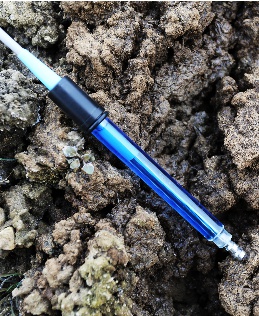
The R4T00-F07L3-00 / R4T00-F07L3-34 are widely used in water industry, bottling industry, bio-fermentation, pharmaceutical, chemical, environmental protection, power plants, printing and dyeing, paper making, plating, petrochemical, and research institutions,and so the industry.
We have the biggest advantage of the price. And according to customer needs, instrument suppliers and customers with special requirements, given the kind of production and manufacturing of brand.
Residual chlorine electrode (constant voltage electrode)
Features:
With a stable zero point performance, ensure that the measurement is accurate and reliable Simple structure, easy to clean Apply to water, chlorine, chlorine dioxide, ozone measurements.
Measurement principle
The Constant voltage(potentiostatic method) is an ‘amperometric’ measurement with constant potential, made through 2 metal electrodes and a reference electrode dipped in a cell. The current running through the cell consumes Chlorine or Ozone contents, thus requiring constant renewal through a constant liquid flow.
In the traditional amperometric measurement it remains difficult to maintain a constant relation between cell current and Chlorine / Ozone concentration, especially near zero, because of the ORP and liquid resistance effects. As a result, frequent zero and sensitivity calibration are needed. In the potentiostatic measuring, the electrodes’ potential is electronically controlled in relation to the liquid, providing a linear current/concentration relationship and a very stable zero value in oxidative absence. The sensor is shaped so that it is easy to clean and replace.
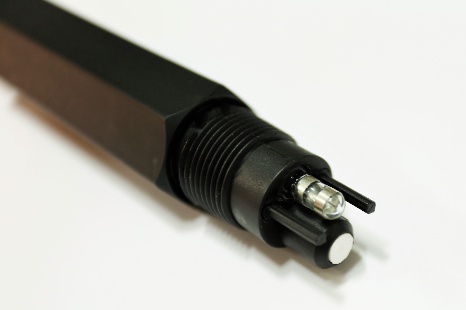
MODEL : R4T00-F07L3-34
R4T00-F07L3-00 / R4T00-F07L3-34 residual chlorine electrode is a constant voltage sensor, It consists of two platinum electrodes and a reference electrode composed of a micro-battery measurement system. Measurement electrode measuring end to maintain a stable potential potential, Different composition of the measured potential of the potential, good linearity of the current intensity.
Range of applications
Applicable to the system the water industry, filling industry, chlorine, chlorine dioxide, or dissolved ozone measurement.
Specification
| Range | Resistant to pressure | Electrode | Reference electrode | Electrode cable | size |
|---|---|---|---|---|---|
| 0~2ppm,2~20ppm,0~200ppm | 10bar /20°C (max) | Platinum | gel/annular contacts | 3m high impedance low noise shielded cable | Φ12×110mm |

R4T00-F07L3-00 余氯传感器(恒电压电极)
[典 型 应 用] 适用于制水行业、灌装行业的余氯、二氧化氯或溶解臭氧的测量。
[测 量 原 理] R4T00-F07L3-00 / R4T00-F07L3-34 型余氯电极是一种恒电压型传感器,它由两个铂电极与一个参比电极组成一个微电池测量系统。测量时在电极测量端保持一个稳定的电位势,不同的被测成份在该电位势下产生不同的、线性良好的电流强度。
[特 点] – 具有稳定的零点性能,确保测量准确可靠
– 结构简单,易于清洁
– 适用于水中的余氯、二氧化氯、臭氧测量
[技 术 参 数] – R4T00-F07L3-00
– 测量范围:0~2ppm、2~20ppm、0~200ppm
– 电 极:2个铂金环
– 参比电极:gel带annular接点
– 材 料:玻璃
– 电极电缆:3m高阻抗低噪音屏蔽电缆线
– 工作压力:10bar在20℃(最大)
– 电极尺寸:直径12mm,长度110mm
본 센서는 항전압 방식의 잔류염소센서이다. 항전압 방식은 일정 전위를 이용한 “암페로메트리”식 측정으로 셀에 금속 전극 2개와 레퍼런스 전극을 집어넣고 이를 통해 측정을 수행한다.
셀에 전류가 흐르면 반응 과정에서 염소 또는 오존이 감소하기 때문에 유속을 주어 분석 대상의 공급을 원활히 할 필요가 있다.
기존 암페로메트리 방식에서는 ORP와 액체 저항 영향으로 셀 전류와 염소(오존) 농도 간 관계를 일정하게 유지하기 어려운데 이 문제는 특히 영 값 가까이에서 두드러진다. 그 결과 영점과 감도 교정을 빈번하게 해야 하는 문제점이 있었지만 항전압 방식은 액체에 따라 전극 전위를 전기적으로 조절하므로 전류/농도 관계가 선형적이며 산화력이 없으므로 영 값이 매우 안정적이고 센서의 형태상 센서의 세척이나 교체가 매우 용이하다.
[기술사양]
전극: 백금 링 2개
레퍼런스: 겔 타입에 환상(環狀) 정션
재질: 유리
케이블: 3m
최대 압력: 20°C에서 10 bar
크기: Φ12×110mm