
Residual Chlorine sensor
Products
Chlorine is used to protect the public health by killing the microorganisms found in water which cause diseases. The chlorine residual test is used to determine the total amount of chlorine present as a residual (the amount of chlorine present after the demand has been satisfied). Because the residual determines how effective the disinfection process is, it is important to make sure that the residual remains within a specified range. Too little chlorine will not give adequate disinfection and too much can kill the aquatic life in the receiving waters.
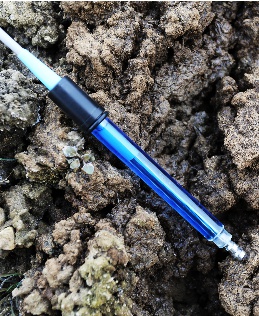
The main purpose for the chlorination of water supplies and wastewater treatment plant effluents is the destruction of disease‑producing microorganisms. Chlorine has a variety of other uses in the wastewater treatment plant operation including odor control and fly and ponding control (in trickling filters). Chlorine can also provide additional wastewater treatment by reacting with ammonia, iron, manganese, sulfide and some organic substances.
Unfortunately, chlorine can cause problems if its use is not controlled very carefully. When used as a control on the disease‑producing bacteria, the idea is to disinfect and not sterilize the effluent. Disinfection is the process of killing disease‑producing bacteria. Sterilization is the process of killing all living organisms. If an attempt were made to sterilize the effluent, the biological life in the receiving waters would likely be destroyed.
The best method for controlling the disinfection process and preventing harm to aquatic life by over‑chlorination is to maintain a specific chlorine residual level in the effluent
There are three forms of residual chlorine in water treatment:
•Free – Residual chlorine composed of dissolved hypochlorite ions, hypochlorous acid and chlorine gas
•Combined – Composed of chloramines that can kill bacteria and oxidize organic matter
•Total – The sum of free and combined residual chlorine
Hypochlorous acid and other strong acids are used as oxidizing agents for disinfecting drinking water. However, these acids can also react as oxidants, especially with lead, which increases the chances of lead corrosion. Therefore, operators in water treatment and distribution plants must ensure that there is the proper amount of residual chlorine as the water reaches the end of the system.
In different settings and situations, there are sometimes required residual chlorine levels to prevent the occurrence of corrosion in water. This level must be determined and carefully studied by water plants for safe and efficient water processing and distribution.
IODINE TITRATION METHOD
Manganese, iron, and nitrite can cause an interference in this method. However, these can be minimized by buffering the solution to pH 4.0 before adding potassium iodide. An unusually high concentration of organic matter may cause uncertainty in the end‑point. If the organic concentration is high and manganese, iron, and nitrite are definitely absent, the end‑point uncertainty can be reduced and precision increased by lowering to pH 1.0 prior to addition of potassium iodide. Sample color and turbidity can interfere by making the starch color change difficult to accurately determine. Interference from more than 0.2 mg/L nitrite can be controlled by the addition of phosphoric acid‑sulfamic acid reagent.
AMPEROMETRIC BACK TITRATION
The only difference between the amperometric method and the iodometric method is the use of a meter to indicate the end‑point. When the end‑point has been reached, a change will occur in the electric current flowing through the meter, which is shown by a clockwise movement of the needle on the meter. In the presence of excess PAO, iodine solution is added until the end‑point is indicated. By subtracting the amount of iodine titrated from the amount of PAO originally added to the sample, the chlorine residual can be determined. (A conversion factor must be used in the calculation because the iodine solution is stronger than the PAO solution).
AMPEROMETRIC DIRECT TITRATION
When PAO is added to a sample buffered to pH 4.0, the excess iodine in the sample is discharged. When the end‑point is reached, a change will occur in the electric current flowing through the meter. This end‑point is indicated by a cessation of counter‑clockwise movement of the needle on the meter. By reading the volume of PAO used in the titration the chlorine residual is determined.
DPD COLORIMETRIC
In this method, the chlorine residual is determined using a spectrophotometer or filter photometer. DPD is used as the indicator. In the presence of chlorine, the DPD indicator solution has a red color. The more chlorine that is present, the darker the red color will be. The intensity of the color is measured against known values from a standard curve. Potassium permanganate is used as the standard for establishing the standard curve because of the difficulty in getting accurate chlorine standards and the ease of handling potassium permanganate. A modification of this procedure using pre‑measured reagents and a hand‑held direct reading colorimeter is also acceptable for chlorine determinations.
DPD TITRATION ANALYSIS
The DPD titration method also uses a color change to determine the chlorine residual. In the presence of chlorine, the DPD indicator solution has a red color. The more chlorine that is present, the darker the red color will be. Ferrous ammonium sulfate (FAS) is used as the titrant in this method. When the end‑point has been reached, the red color will disappear. The amount of chlorine present is equal to the amount of FAS titrated.
ION ELECTRODE METHOD
Strong oxidizing agents, including iodate, bromine, cupric ion and oxidized manganese, that can convert iodide to iodine, interfere with the method. Silver and mercuric ions must be below approximately 10 mg/L. Chromate ion, an interference in the amperometric methods, does not interfere with this procedure. Color and turbidity do not interfere with the method. The electrode slope is unaffected by temperature. However, because the calibration curve shifts by about 0.2 mv per °C, the standardizing solution should be close to the temperature of the samples. Maintain the standardizing solution at or near the expected temperature of the samples.
GLOSSARY
Chlorination
Adding chlorine or chlorine compounds to water for disinfection.
Chlorine
An element used to kill microorganisms in water. At room temperature and atmospheric pressure, it is a greenish yellow gas.
Chlorine Demand
The amount of chlorine used by reactions with substances that oxidize in the water before chlorine residual can be measured. It is the difference between the amount of chlorine added to wastewater and the amount of chlorine residual remaining after a given contact time. Chlorine demand may change with dosage, time, temperature, pH, and the type and amount of pollutants in the water.
Chlorine Dosage
The amount of chlorine which must be added to produce a desired result (disinfection of the effluent, control of filter flies, ponding and odor).
Chlorine Residual
The amount of available chlorine present in wastewater after a given contact time (20 minutes at peak flow; 30 minutes at average flow), and under specific conditions including pH and temperature.
Combined Available Chlorine Residual
The residual consisting of chlorine that is combined with ammonia, nitrogen, or nitrogenous compounds (chloramines).
Free Available Chlorine Residual
The residual consisting of hypochlorite ions (OCl‑), hypochlorous acid (HOCl) or a combination of the two. These are the most effective in killing bacteria.
Total Chlorine Residual
The total amount of chlorine present in a sample. This is the sum of the free chlorine residual and the combined available chlorine residual.