
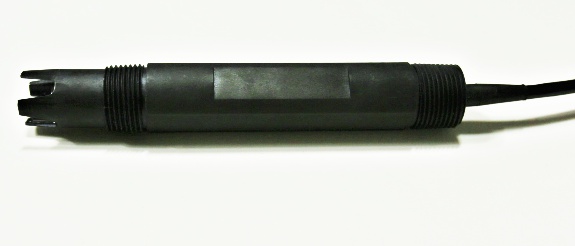
pH Electrode for Pharmaceutical
Products
technical features:
The measurement range:0~14 pH , zero potential Eo=7pH and the pressure resistance:0.6MP.
The temperature range:0~130℃,suitable for steam sterilizable
Good stability and small deviation of electrode.
Quick response of electrode.
The electrode is in accordance with the requirements on sanitation of foods.
The dimension of the electrode is φ 12×120, 150 and 225 or other dimensions.

What’s HF
When you are talking to others, be aware that the abbreviation HF could stand for three different things – ‘high frequency’, ‘hydrogen fluoride’ and ‘hydrofluoric acid’. You may meet the former meaning in connection with welding or other electrical equipment. However most of the time in the University context the letters HF mean ‘hydrofluoric acid’.
Hydrogen fluoride is a gas. Hydrofluoric acid is a solution of hydrogen fluoride in water.
You may also come across ‘buffered HF’. A buffered solution is designed to maintain a reasonably constant pH against the addition of modest quantities of either hydrogen or hydroxide ions. The way that this is normally done is to use a solution of a weak acid in conjunction with one of its soluble salts. Thus buffered HF contains HF and a soluble fluoride. There are therefore more fluoride ions in the solution than there are hydrogen ions and you may decide, after reading the sections on properties and effects of exposure, that a buffered solution may be more dangerous than an ordinary HF solution of the same pH.
HF Electrode
Solutions containing hydrofluoric acid Hydrofluoric acid attacks the glass membrane chemically and prevents, even in small concentrations, the development of a gel layer. This leads to unstable measuring values and also reduces the life span of the electrode. Hydrofluoric acid attack occurs only at pH values below 5.
It is possible to measure pH at total fluoride concentrations of 0.2g/L (pH 1; 20 °C) up to 1g/L (pH 3; 20 °C). Special electrodes are available for such applications. At higher concentrations, an antimony (Sb) electrode and a special reference electrode must be used.
MODEL : XPA73-F7L2-34
Technical feature:
- Combination electrode
- pH range : 0~7pH
- Temperature range : 0~80℃
- Cable length : 7M
- Connection : G,R – U Terminal (BNC Option)
- ATC : None (ATC Pt1000Ω Option)
- Body Material : Glass
- Long life
- Sensitive response : the measured value 95%can be reached up in several seconds
- Contimuous and stable measurement
- Pressure resistance : 0.3MP and the zero potential E0=7pH
- The external dimension : Approximately φ12 x 120mm
